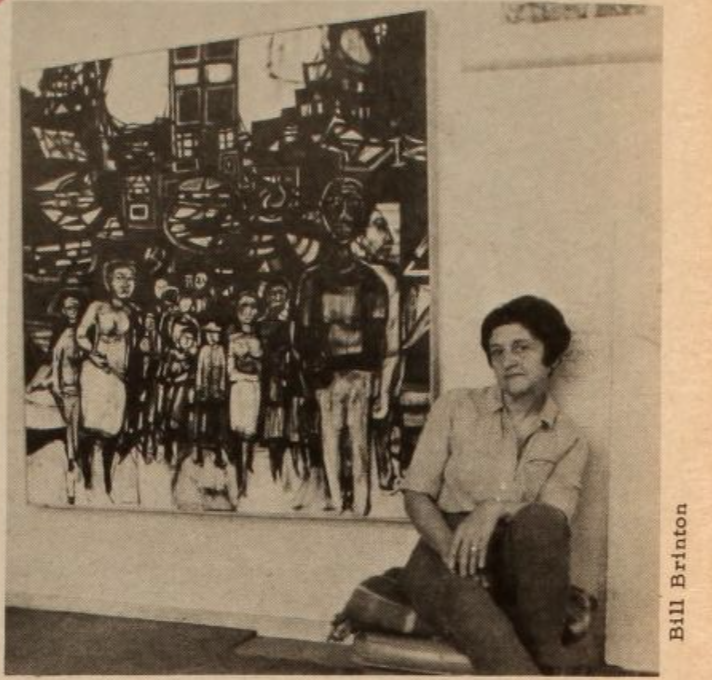
Jean Halpert-Ryden at an exhibition, San Francisco, 1971.
Photograph by Bill Brinton, Potrero View.
Artforum Vol. 1 No. 1 · 1962 — California Palace of the Legion of Honor, Solo Exhibition · 1959 — Thomas Albright, Art in the San Francisco Bay Area, 1945–1980 · 1985 — Collections: SF Arts Commission · IBM Corporation · Kaiser · Clorox · Adam Mickiewicz Museum, Warsaw
Jean Halpert-Ryden (1919–2011) was an American painter active from the 1940s–1990s.
-
Jean Halpert-Ryden (1919–2011) was an American painter working in San Francisco from the late 1940s through the early 1980s, with a practice that continued in Israel and California through the 1990s.
She held a solo exhibition at the California Palace of the Legion of Honor in 1959, was reviewed in the inaugural issue of Artforum in 1962, and was cited by Thomas Albright in Art in the San Francisco Bay Area, 1945–1980.
This project seeks to reintroduce Halpert-Ryden's work into the discourse of postwar American art.
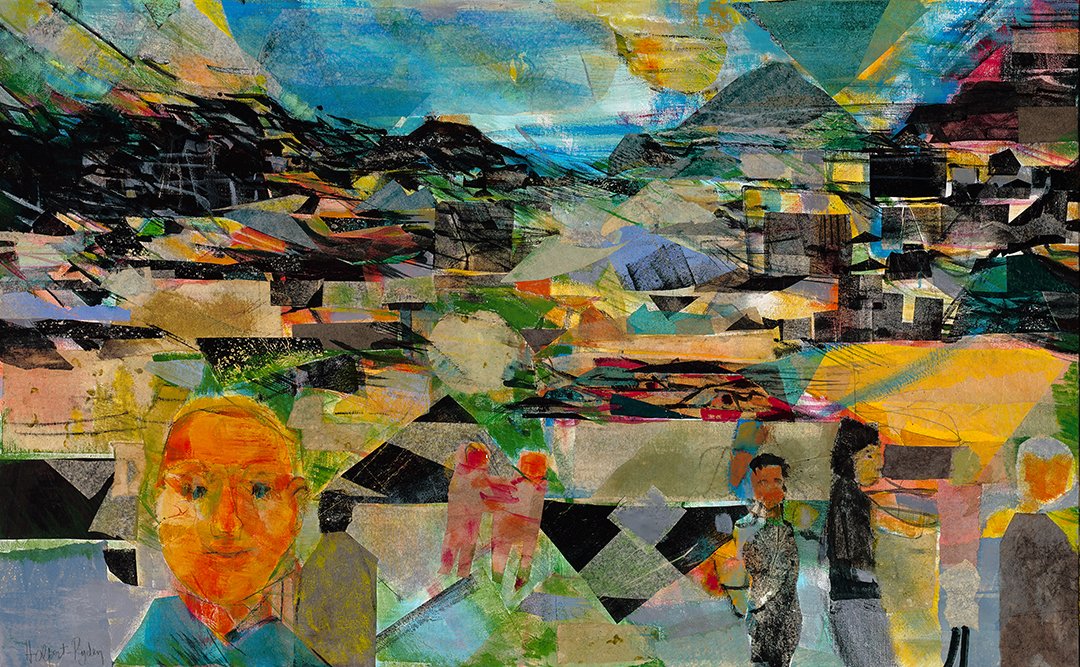
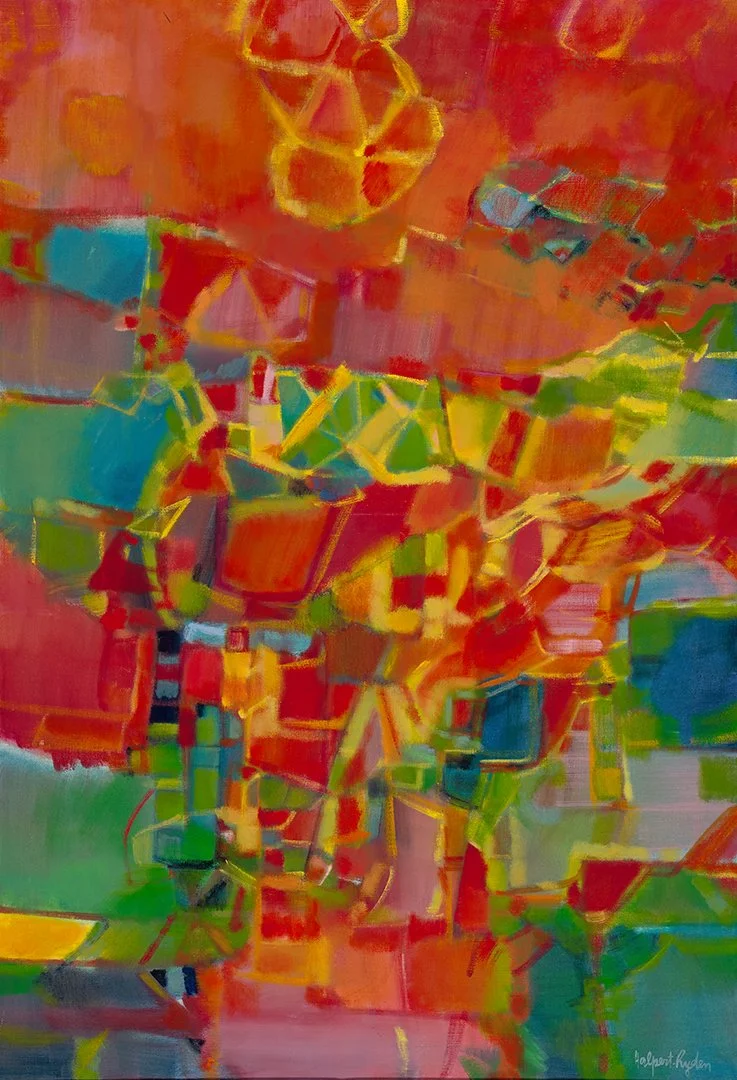
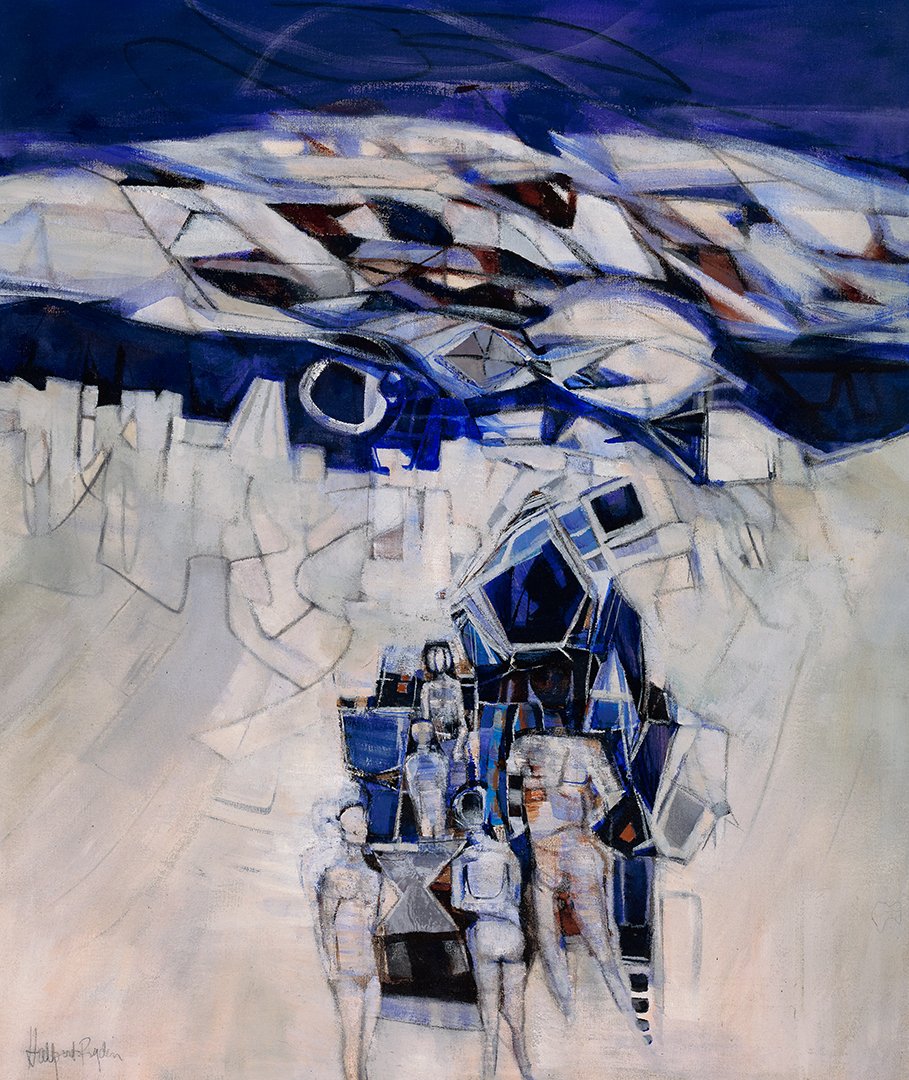
This site presents a collection of approximately forty works spanning 1948 to the 1990s, organized into six curatorial threads that offer multiple entry points for exhibition and research.
This platform is intended for curators, researchers, institutions, and collectors engaged in postwar and contemporary art. The work remains open to further interpretation as research continues.
The collection invites engagement from museums, curators, and scholars. Inquiries regarding exhibition, loan, and research collaboration are welcomed.

More about Jean Halpert-Ryden
-
Jean Halpert-Ryden (December 26, 1919 – March 14, 2011) was an American painter, printmaker, and mixed-media artist whose work spanned five decades, engaging themes of memory, displacement, urban life, and moral witness.
Born in Brooklyn, New York, she studied at Brooklyn College and with painter Moi Solotaroff in New York, within what the Smithsonian archive describes as "a collective of young artists" under Solotaroff's leadership. She later studied printmaking and lithography at the California College of Arts and Crafts in Oakland. Her first exhibition was in 1946 at the Norlyst Gallery, New York — a Surrealist venue co- founded by Jimmy Ernst and Elenore Lust; Louise Bourgeois exhibited there the following year.
She married artist and designer Edward Ryden (1922–2013) in 1947. The couple relocated to San Francisco in 1949, where both became active figures in the Bay Area modernist community. They lived at 778 Kansas Street in Potrero Hill and built a second home on Sonoma Mountain in Sonoma County.
In 1963 she delivered a public lecture, "A Place for the Artist in a World of Crisis," in connection with the peace movement. She and Edward moved to Israel in 1985, where they helped found a community in the Galilee hills. She continued working there until returning to California in 2002. She died in Santa Rosa on March 14, 2011.
-
Halpert-Ryden's public career was marked by sustained institutional recognition across three decades. She received prizes at the San Francisco Women Artists Annual Exhibitions in 1952 and 1955. In 1957, End of Summer won a Cash Prize at the San Francisco Art Association Annual at SFMOMA — an exhibition that also included Richard Diebenkorn, David Park, and Nathan Oliveira. In 1959 she held a solo exhibition at the California Palace of the Legion of Honor — thirty-five works, with a catalog published in the Legion Bulletin. Her work was reviewed in the inaugural issue of Artforum in 1962 and cited by Thomas Albright in Art in the San Francisco Bay Area, 1945–1980 (University of California Press). The Monterey Peninsula Museum of Art mounted a retrospective in 1981, noted in Art in America.
Her work entered the collections of the San Francisco Arts Commission, IBM Research and Development Laboratory, Kaiser Center, Clorox Corporation, the Society of Motion Picture Art Directors, Leo Daly and Company (Omaha), and the Adam Mickiewicz Museum (Warsaw, Poland).
-
Parallel to her public exhibitions, Halpert-Ryden developed a Holocaust memorial series across more than three decades — from the early 1940s through 1976. Sixteen titled works from this series are documented in her own hand. This collection holds the opening and closing works: Emergence (1948) and Memorial for the Unfulfilled (1976).
-
In the catalog of her 1971 exhibition In Black and White:
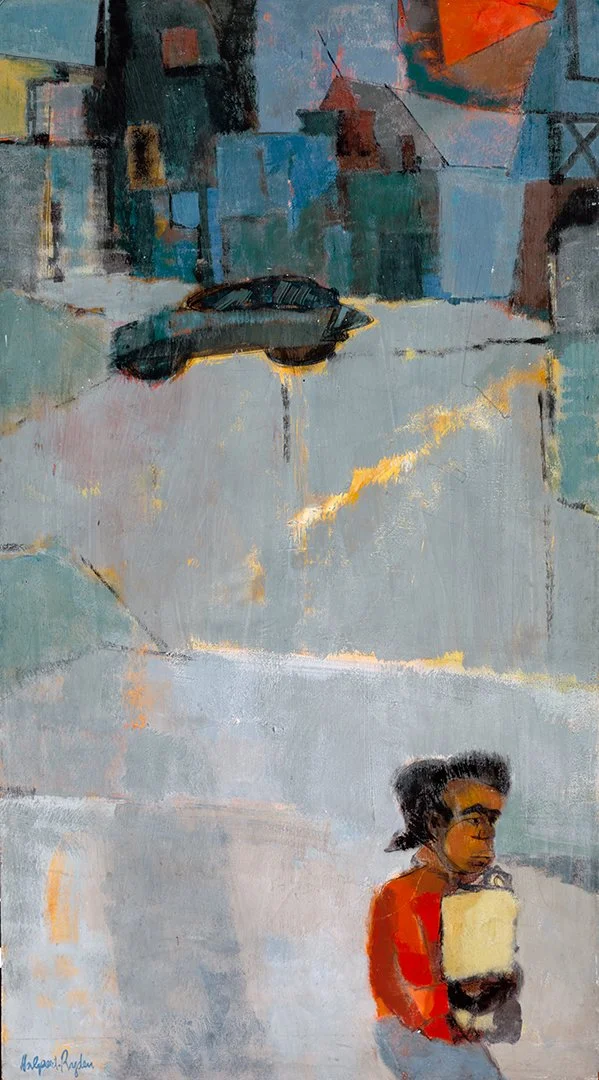
"I have been concerned with painting people in the American environment since 1956."
"I believe that art occurs when content and form inter-penetrate so thoroughly that the result is neither end nor beginning and that the potential synthesis must lie the complete quality of life itself."